Ever since I got to Singapore in my travels (about 2 months in), which next to Hong Kong has some of the cheapest electrical products in the world. I have been travelling with a Canon SLR camera. To be more precise a Canon 500D. The amateur / enthusiast level aimed SLR camera, weighing in at around 500g body only, and closer to 800g with battery, memory card and basic kit lens (naff quality 3x zoom). Add in things like a battery charger, bag, cleaning equipment, then it easily hits the 1Kg mark, where it starts to become significant in your airline luggage allowance, especially if you fly on cheaper airlines with 15Kg luggage limits.

The trusty 500D
Before I had an SLR, I had a simple Panasonic compact. There was nothing wrong with it, but it was getting a little tired. A trip out with a friend into photography to learn about historic Malaysian culture showed that although I certainly could take a good photo (in fact they weren’t much different from Sydney’s who accompanied me on that trip in terms of subject) the quality was lacking somewhat, and it didn’t give the dynamic range of colours or flexibility in achieving desired results. Nor did I have the capable speed to get away with some of the crafty shots he took. They just appeared flat.
The one which really showed a difference was an indoor low light shot. A window was opened casting a square of light on the floor. Sydney’s Canon 450D captured this as we saw it, but the compact camera didn’t have a chance, just smudging the light together on the floor, you couldn’t even tell it was a source of light from a window. I could have spent a lot of time editing it on a computer after. But I wanted to travel, not edit every photo I took. So it was time to get a better and more capable camera.

Testing out an SLR
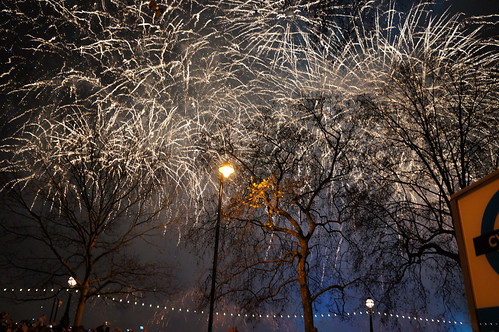
After getting miffed at a shopkeeper for convincing me to buy a camera I didn’t want (A Nikon D1000 if my memory serves me correct) I returned it within the hour and got a 500D instead. Instantly, the capability of the camera started to show itself off, and I took photos I couldn’t before, especially night shots like above. It wasn’t the larger amount of megapixels, it was the more modern sensor technology and larger size which helped me do this. I was hooked.

Fast to operate is important in capturing moments too
Photography is to most people capturing memories. Although I spent a sizable percentage of my travel budget on my camera, I know I wasn’t going to do this sort of travel again at this stage in my life again, so it was worth spending the money, even if it did cut my travels down by a month or two. I’d regret coming back with 20 months of ‘half decent’ photos more than coming home with 18 months of high quality, ‘hang on your wall at home and be proud’ photos to keep for life and show family members of generations not even born yet, let alone people interested in my travels online here and now. It was the right decision.

Colour range is more dynamic and true with larger sensors
Before travelling, my main hobby was cars, I spent hours doing everything you can imagine on them, from touching up paintwork, to complete engine swaps, but this was not a hobby to take with you around the world (unless you happen to work for a Formula 1 team). Photography however goes hand in hand with travel. In fact it pretty much works with every other hobby which doesn’t involve computers as people always want photos of what they love, be it sport, travel, family or their favourite Car toy.

Could do with some more zoom here...
When I left South East Asia and got to Australia, I decided it was time for a lens upgrade. The most appropriate to travel with seemed a large zoom (just look at the photo above and tell me I don’t require a telephoto lens!). So I picked up what I thought was the best lens to travel with – A Tamron 18-270mm which is basically a 15x zoom. This seemed to give me the big zoom I desired, with a manageable price range. Going from 18mm meant I could send my kit lens back home too, and travel with just one lens, albeit a 550g one. I never did buy another lens for that camera, even though the auto-focus speed disappointed me on the Tamron.

You don't want to get too close to these
The zoom allowed me to get even more shots which I couldn’t before, and still have it on a high quality camera. Now I know a bit more about camera’s and lenses, I wish I saved up for a Canon equivalent such as the 24-105mm F4 L or 70-200mm F4 L however this would have required a lot more money, and sacrificed some of the zoom range (on both sides wide angle and telephoto) as well as more months off the amount of travel I could do. When there is limited money, something needs to give unfortunately, but I’m still very happy with my decision. I still didn’t do much post processing except from a bit of HDR photography when it started to become fashionable.

HDR can be nice, but many people over-do it
After extensive time in Australia, through dust, bush fires, very long roads and severe heat, I came home briefly from my travels before heading off to Japan. During this period of not using my camera much, I discovered mirrorless cameras with interchangeable lenses and large sensors. Specifically the Olympus PEN range. I loved the idea and it seemed perfect for travel. Small, high quality, flexible (can change lenses), and a decent enough sensor size to match SLRs (maybe not the latest ones, but slightly older ones for sure). They were referred to as micro 4/3 (four-thirds) cameras as that the sensor size. Meaning a 2x crop from full frame, rather than 1.6x crop like most mid range Canon SLRs have (APS-C size sensors). Not a huge difference in reality. Excited, I decided to buy one and would sell my Canon to fund it.
That’s until I saw the price of them.

You can't get shots like these on phone cameras (well when I wrote this article anyway)
Holy crap, is that a joke? £800? I could have stepped up to a more serious SLR for that. Deflated a bit, I thought I’d keep my Canon 500D and wait for prices to drop and see if I still felt the same. I was off to Japan and had accommodation there in Fukushima for the duration. So I didn’t need the ultra lightweight kit as I wouldn’t be carrying it everywhere with me and living with it hanging off my back/shoulders/neck.

However, if you aren’t used to carrying weight around, when you actually need to, it becomes more apparent as the unused muscles aren’t so prepared for it. So although my camera equipment wasn’t any heavier, I was a little unprepared so the weight became more noticeable on every trip I made when I got the time off work to do so. City trips became more of a chore, but I didn’t have a better choice.

Japan has many photo opportunities
Then I got my first smartphone with a usable quality camera on, the iPhone 4. I wouldn’t recommend this for your primary camera if you’re going on a ‘once-in-a-lifetime’ trip and want to capture the memories. No current smart phone is (and won’t be until high quality lens adapters become available) good enough for that job. Do you really want to be showing your future grandkids photos of your travels taken on a 5 Megapixel phone?

Tsunami in Japan 2011 - taken with my iPhone
Unfortunately the iPhone won out in a few situations where I just couldn’t be bothered with lugging around an SLR. I didn’t even have the biggest metal body SLR, or heavy high quality glass in my lens. I only had 1 lens! But still, the big clumsy thing has its uses when you’re prepared for setting up a night shot. But try poking one in peoples faces on the street or in a pub and see how candid their faces remain. I’d go as far as saying if you’re using an SLR for street photography, then you’re not a professional, as its completely inappropriate equipment for that situation.
Different cameras suit different jobs. As a travel photographer I need the biggest flexibility in my camera. Nothing too big to scare off people and prevent me from wanting to carry it, nothing too small to miss capturing fine detail or too slow to even get the shot I wanted. I sold my Canon 500D. Thank you for the service, but it’s time to move on.

Some people do pose for SLRs though
So this is where I come back to my thoughts at the start of last year. I need an in-between system to suit. I can’t sacrifice quality when it comes to my memories, but I want to sacrifice weight for the sake of my body and enthusiasm for photography, this brings us back to those micro 4/3 cameras.
Micro 4/3 cameras have indeed moved on. In fact that defined the sensor that only 2 manufacturers used at the time – Olympus and Panasonic. It’s not the sensor size that is the revolution, it’s the size, and this comes from removing the mirror. So now known as mirrorless cameras, or compact system cameras as you can change a whole lot on them (i.e. the lenses and flash).
Pentax have something called the Q camera. Which despite the James Bond sounding name, is actually a compact size sensor with interchangable lenses. The lenses are called toys by Pentax themselves. So I won’t say anymore about this, other than give it a miss. They have a newer mirrorless camera out now too, but it uses the same mount as their SLR cameras, so its just as big, missing the point entirely – again, give it a miss unless you’re a long time Pentax user.
Nikon have entered the ring with the Nikon 1 system, which is incredibly quick at autofocusing, but use a sensor which is 2.7x crop from full frame size. It’s proving to be quite capable considering the size. It’s also very expensive and Nikon are using the usual strategy of holding back technology to announce it as an improvement in the next generation camera. This means you’ll be wanting the next camera when it’s announced. So I also wouldn’t bother with this system just yet.
Panasonic and Olympus use the micro 4/3 format. A 2x crop from full frame, and have a whole range of cameras suitable for cheap and cheerful to nigh on professional quality video makers (Panasonic GH cameras) to the most advanced and innovative digital camera technology (Olympus OM-D line). They also can share lenses between manufacturers, which makes it a lot more versatile and quicker to advance than the other competitors.
Stepping up to compact cameras with full APS-C size sensors (the same size as you’ll find in most Nikon, Canon, Pentax and Sony SLR cameras), we have the Sony NEX range which offers basic to professional control versions of their cameras and the similarly named Samsung NX

That about wraps up the options here. Canon offer a high end compact with a large sensor inside and full manual control (called the Canon G1X) but personally I’d not bother with that, it takes away the flexibility of changing lenses, and isn’t even that small (remember how I quickly needed a zoom for travel?).
To conclude this rather long article (which is supposed to be a send off to my old Canon 500D but seems to have turned into a look to the future of my travel photography) I should probably dispense some advice now; and also state that I have been working in a well known camera shop part time for the past few months saving up for my next set of adventures abroad while I study to complete another degree this year. So I’ve had a decent play with most of them.
I’ve already said why you shouldn’t go for Pentax, Canon and Nikon. So that leaves Olympus, Panasonic, Sony and Samsung cameras left in the field. Interestingly, 3 of these companies are giant electronics companies, and only one having a long history in cameras. It just goes to show that if even the big companies don’t innovate, they’ll soon get pushed out by younger companies with nothing to lose (especially if these younger companies are actually well established in other related areas like televisions – what camera doesn’t come with a monitor on the back, and a processor inside now?)
Samsung seems the least dedicated to the cause. They have a good system in place, but aren’t getting supported by other optical companies which is really leaving them behind. They aren’t selling as well, so it wouldn’t be a bad financial move for Samsung to ditch this range of cameras. Their compacts aren’t very good either. So I’d write them off as they aren’t trying hard enough (especially with relationships with other companies).
Sony are making very good cameras (winning plenty of awards from many parts of the photography world, worldwide), but they don’t have a decent range of lenses currently, and their roadmap for the future (all announcements into 2013) show that they don’t have large ambitions either. If you have legacy lenses you want to use on a smaller camera, then I think Sony is the best bet though. Also seems to give the best image quality out of most of the cameras available (providing you put good glass on it, which will cost you a whole lot more). They bought Minolta and have a link with Carl Zeiss so they are in the game for the long run though. Not a bad choice. That APS-C sensor gives higher quality than my Canon 500D could manager, but to mount the Sony 18-200 lens on which matches the Tamron I had, would cost more money and be around the same size and weight. So what’s the point of getting rid of a trust old Canon?
Olympus seems to have financial problems and historically have shown to jump ship when things aren’t working out. However things are working out now with the micro 4/3 format so they are a good choice. I love the way the E-P3 handles, looks and renders photos. It is however expensive, but their newer high end line (Olympus OM-D E-M5 if thats enough letters for you to remember) is even more so expensive, but offer the only weather proofed camera and 5-axis in body stabilisation in this format. The range of lenses is quite comprensive too. I can replace that Tamron 18-270mm for something of similar quality, but lighter and cheaper, there is a few choices to replace it with too.
Panasonic seem to develop electronics inside their cameras quicker than Olympus, which is not surprising from an electronics company. The bad news is with image stabilisation in the lenses, legacy lenses (and current ones made by Olympus) won’t be stabilised when on a Panasonic camera, but they all are stabilised on Olympus cameras. For video, the Panasonic GH range has earnt a reputation for being one of the best in the business. Comparable to the Canon 5Dmkii which if you don’t know your cameras, is around 4x more expensive offering cinematic quality if you put in the effort. They do have a relationship with Leica too, giving them more than enough credibility when it comes to the optical side of things.

So in conclusion: If you have old lenses you want to keep and use, go for a Sony. If you are primarily interested in video, get a Panasonic GH camera. If you are looking to buy into a whole new system, go for a high end Olympus camera, or a mid range Panasonic. I’ve tried to avoid specific models as they go out of date quicker than this article will.
Feel free to ask any questions as I love camera gear. Also let me know if you’ve taken my advice or have a big objection against something I’ve said. Everyone had different needs, but this is the best advice I can give to someone like me, who loves to take photos when travelling, and uses them online and is looking to get published in photography magazines/websites too.


{ 11 comments… read them below or add one }
Hi Rob,
Great article! I’m just very new to the idea of travel blogging but about to head off on a big trip this year and planning for the trip + setting up a blog at the moment.
I thought long and hard about a good travel camera to get and went with the Olympus E-PL2 which I bought about 10 months ago to get used to it… I’m only an amateur but I’m finding it a great ‘best of’ camera where you get the benefits of the larger sensor and better lens’ for good photos, but also a good size and weight that doesn’t restrict me too much when traveling around. Take that with a grain of salt because I’m not overly skilled in photography but that is how I see it compared to other cameras I’ve used/seen.
I’ll be following along from now on :)
Jarratt
Jarratt´s latest blogpost – Welcome to Shiny Shoestring!
Thanks! The Olympus E-PL2 is a great little camera, although the auto-focus is a little slow compared to the newer micro 4/3 range. But if you bought it 10 months ago, then you probably bought one of the top 3 cameras I’d recommend for travel looking back then.
Behind the times already! Haha
That’s always the way with consumer electronics! It’s best just to ignore the market until your current item breaks or starts to feel old. I was quite content with my 500D until I got the NEX-5n, then it just sat in its bag until I sold it.
Same thing with laptops too.
Thanks for sharing Rob. I’m also a travel blogger considering to upgrade my camera; now I’m using a Canon Powershot G11. I love it’s size and how easy it is to carry it everywhere; it takes really good photos people don’t feel too intimidated by it. But it has a scratch on the lense and I’m considering replacing it soon. I would like to have the flexibility of changing lenses, but don’t want to carry around a lot of gear. These cameras seem to be a good option, I am leaning towards Sony or Panasonic. Your post has made some good points to help me on my choice. Thanks again!
Bianca´s latest blogpost – Welcoming Spring at Sucrerie de la Montagne
You’re welcome. The G series by Canon is a good choice for travelling with (I like the S series more though because they are smaller).
Sony, Panasonic and Olympus have the better options at the moment. Olympus and Panasonic seem to have really picked up in popularity since dropping the price of their slightly older models too.
Nikon 1 series is good, but way overpriced at the moment. Maybe in 3-4 years it will be the best choice, but we’ll see.
If you’re Canon lover, you can buy first their mirrorless camera, Canon EOS M for $799 with EF-M 22mm f/2 STM Lens. There are one additional lens and EF/EFS lens adapter.
You can start pre-order at BHPhotoVideo and Amazon with expected availability at October 15 2012.
Canon? They took their time to get into the settled mirrorless market. Offering just 2 lenses, with no viewfinder, built in image stabilisation and a ixus looking design, I think I’ll still with my Olympus thanks.
Thank you for your article. My husband and I are setting off on a world cycle expedition next year and are being very indecisive on the camera front! We both love photography and want to capture as much of our journey through the lens as possible. We want to take a good enough piece of kit that will capture remarkable scenes and also give us enough manual adjustments to play with as we develop our photography skills. Obviously, size and weight will be an issue for us and less intimidating would be better! We are pretty much set on the OM-D E-M5 but don’t want to regret not getting an SLR at the end. If we were to take 3 lenses with the OM-D, which would you recommend? Is there any other extras you would recommend us taking? Many thanks and happy travels. Holly
Hi Holly,
The OM-D is a very high end camera, so it may initially seem a little more confusing than a basic entry level dSLR, but rest assured it’s a lot better. There are a few situations where a dSLR is better, but generally the E-M5 will win out, mostly on the portability front.
The lenses entirely depend on budget and what you will be shooting of course, but I’ll make a few assumptions. The OM-D can come with a 12-50mm f3.5-6.3 lens, which is OK as a basic lens and is weather proof, but I sold mine as I didn’t use it enough. So assuming you are starting with body-only, these are the lenses I will recommend (with links):
1. Panasonic 25mm f1.4 – This is the only lens I’ve owned for a few months and I’ve never loved a lens more. It’s fixed focal length is ideal for up close things (including portraits) and the high speed is good for night shots, and even landscapes if there isn’t a particular feature (like a tree) you’re trying to capture. If you said I want one lens, this is the one. The other thing (main reason for me) is hard to describe, but it’s how it renders images. This comes from the Leica input to the design (which is also why it’s a bit expensive). If you’ll excuse the Disney term – it’s magic, look on my photography page for some recent examples as they are nearly all with this lens and camera combination. A cheaper alternative is the Panasonic 20mm f1.7, it’s very similar, but half the price, size and weight. It doesn’t have the same rendering quality though in my opinion.
2. Panasonic 7-14mm f4. – This is the next on my list and one I think is great for travel. It’s wide so will fit most landscapes in, everyone who owns it seems to love it. A cheaper alternative is the Olympus 9-18mm f4-5.6 but it doesn’t go as wide, otherwise people don’t usually complain about it.
3. Olympus 40-150mm f4-5.6 – This is a nice all rounder for the price. The lenses are mostly plastic so despite its large zoom range, it is quite light still. This will allow you to zoom in closer to subjects when you can’t move near them, like animals or a protected area. If you want to splash out then the Panasonic 35-100mm f2.8 is very nice also. However it is more pricey, bigger, heavier and has less zoom range. It’s also new so will likely drop £250 or so over the next half year whereas every other lens I’ve suggested probably won’t depreciate. The 25mm often goes up in price if anything.
These more compact mirrorless machines attract me a bit, but I just can’t get rid of my good-old Nikon DSLR…
I will certainly keep your review on file, in case I’ll buy a mirrorless machine. At least for a secondary, lighter camera…
{ 2 trackbacks }